Showing posts with label Reformation. Show all posts

Thursday, October 26, 2017

What to do with freedom

"What will you do with that freedom?"

Whether those words were actually uttered by William Wallace we
do not know.

They are a portion of a battlefield speech delivered by Mel Gibson 
in the movie Braveheart in which he portrayed the legendary freedom fighter during the Wars of Scottish Independence. 

Wallace was speaking of the personal, social, political and national freedoms sought by people who had lived a long time without any of them.  
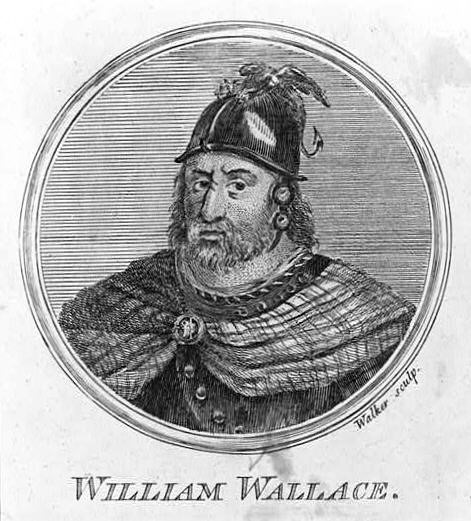
In a speech to his victorious troops he asked, now that you are free, what are your plans? Will you continue the fight to its conclusion, or will you slip back into the old ways and slowly become slaves again? 

Two centuries after William Wallace was captured and executed by England's King Edward I in 1305, Martin Luther and others like him were used by God in their time to expose a different kind of freedom for the people, achieved for us by a different victor, Jesus Christ.

The freedom won by Christ, through his death and resurrection is our release from the guilt of sin and the curse of eternal death.  It is, in fact, life itself, the freedom to follow Him.  His victory is our victory, a gift to us through faith in Christ.

But Wallace-like questions ring in our ears.  Now that you are free, what are your plans? Will you continue the fight to its conclusion, will you live the life of forgiveness and joy that you have been given, or will you slip back into the old ways and slowly become slaves again?

What will you do with that freedom? 

In the Large Catechism, Luther observed that the answer to holding on to our Gospel freedom is daily living our Baptism, saying it “is nothing else than putting to death the old Adam, and after that the resurrection of the new man, both of which must take place in us all our lives, so that a truly Christian life is nothing else than a daily Baptism, once begun and ever to be continued.

This must be practiced without ceasing, that we ever keep purging away whatever is of the old Adam, and that that which belongs to the new man come forth.” 


This is the freedom of a Christian, new life every day.  

As we observe the 500th anniversary of the Reformation it is important to understand what really happened.  

In the Reformation the Church didn't change, not the true Church anyway.  It belongs to Christ.  It never changes.  It can't change.   

People were changed when the unchanging truth of God's Word was revealed and blind, enslaved hearts were set free.

Every day is a fresh day with the freedom to follow Jesus.  It' still all about him.

By the way, if you've never seen Gibson's famous freedom speech, here is it on Youtube. 

Wednesday, August 16, 2017

A common confession

For the past several months the pastors and board of elders of King of Kings Lutheran Church have been studying the Book of Concord, a collection of documents written by church reformers in the 1500's.
  
Its subtitle is The Confessions of the Evangelical Lutheran Church.

Most people probably interpret "confessions" as admissions of guilt, like admitting one's crimes to the police or confessing sins to a priest.  Some dictionaries inaccurately define the word this way.
The actual meaning of confession is different.

It is a statement of the truth regarding a particular matter.

The confessions of our church are clear statements of Christian doctrine, based solely on Holy Scripture, contrasted to the errors taught by the church in earlier days.

The Book of Concord is not a Lutheran addition to scripture.  It is not to be compared to the Book of Mormon, for example.
  
The Book of Concord introduces no teachings that are not found in the Bible, and it makes no theological points that are not supported by holy scripture.

Here is what this collection includes:

  • Three ecumenical creeds (Apostles, Nicene, Athanasian)
  • Augsburg Confession (1530)
  • Apology (Defense) of the Augsburg Confession (1531)
  • Smalcald Articles (1537)
  • Treatise on the Power and Primacy of the Pope (1537)
  • Small Catechism (1529)
  • Large Catechism (1529)
  • Formula of Concord (1577)

The pastors and elders of our congregation recently completed our study of the Augsburg Confession and began to tackle the Smalcald Articles.

These articles bear the name of a defensive league formed by leaders of German territories who supported the Reformation.  The Smalcald League was a military alliance formed to defend against an expected attack by Charles V, the Roman Catholic emperor of the Holy Roman Empire and the princes of Catholic German provinces supporting him.  

Written by Martin Luther, the articles were never acted upon by the Smalcald League, even though they were signed by most of the League's members.  They did adopt the Treatise on the Power and Primacy of the Pope authored by Luther's colleague, Philip Melancthon.

Americans today would shudder at the intermixing of religious faith and secular politics that were characteristic of life in the 1500's.  But leaders then recognized that religion is an essential aspect of what binds people together.

The Lutheran princes were prepared to go to war to defend the Reformation, but only if they were in doctrinal agreement with one another! They recognized the importance of unity in faith.

One of Luther's staunch supporters, Elector Frederick, believed the Smalcald Articles were such a clear confession of Christian teaching that he included them in his last will and testament.

Here is the First Article, called the Chief Article by Luther.

"1] That Jesus Christ, our God and Lord, died for our sins, and was raised again for our justification, Rom. 4:25.

2] And He alone is the Lamb of God which takes away the sins of the world, John 1:29; and God has laid upon Him the iniquities of us all, Is. 53:6.

3] Likewise: All have sinned and are justified without merit [freely, and without their own works or merits] by His grace,through the redemption that is in Christ Jesus, in His blood, Rom. 3:23f

4] Now, since it is necessary to believe this, and it cannot be otherwise acquired or apprehended by any work, law, or merit, it is clear and certain that this faith alone justifies us as St. Paul says, Rom. 3:28: For we conclude that a man is justified by faith, without the deeds of the Law. Likewise 3:26: That He might be just, and the Justifier of him which believes in Christ.

5] Of this article nothing can be yielded or surrendered [nor can anything be granted or permitted contrary to the same], even though heaven and earth, and whatever will not abide, should sink to ruin. For there is none other name under heaven, given among men whereby we must be saved, says Peter, Acts 4:12. And with His stripes we are healed, Is. 53:5. And upon this article all things depend which we teach and practice in opposition to the Pope, the devil, and the [whole] world. Therefore, we must be sure concerning this doctrine, and not doubt; for otherwise all is lost, and the Pope and devil and all things gain the victory and suit over us."


Christ alone, grace alone, faith alone, scripture alone.  

The Book of Concord is not a substitute for the Bible.  It is merely the historic, clear statement of what the Bible says to us.  As Lutherans, it is our common confession.

"But in your hearts honor Christ the Lord as holy, always being prepared to make a defense to anyone who asks you for a reason for the hope that is in you; yet do it with gentleness and respect."         1 Peter 3:15


You did it to me

This space has been quiet for several months, but today I want to share some thoughts that I expressed at the recent funeral of a friend, co...